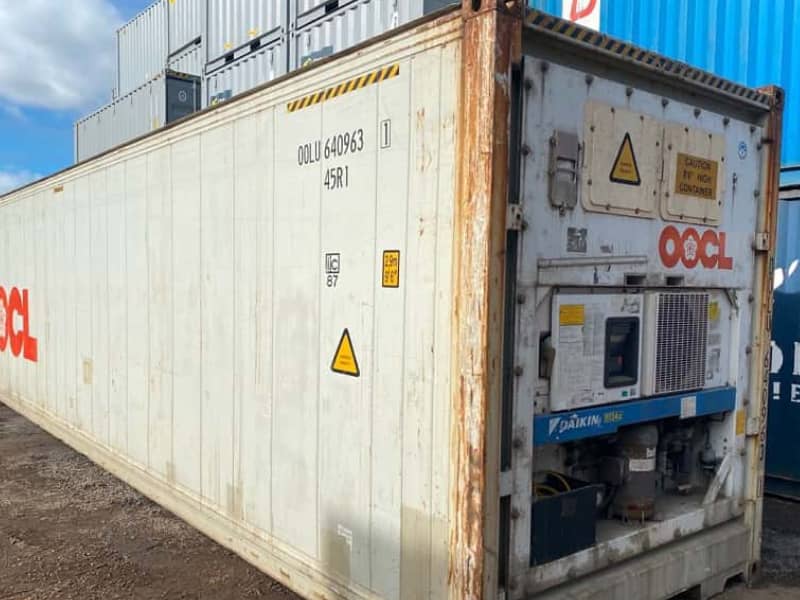
Expand cold storage with Used 40 Ft High Cube Refrigerated Containers for industrial use
All Regarding Cold Store Containers: Necessary Insights for Your Storage Space Demands
Cold storage space containers play an important function in the conservation of perishable products. They can be found in numerous types, consisting of refrigerated and protected units, each created for particular storage demands. Understanding the benefits and essential attributes of these containers is important for companies aiming to optimize their operations. As the need for reliable storage space remedies grows, discovering the different choices offered can cause educated decisions that affect both profitability and sustainability. What variables should one consider when choosing the right container?
Kinds Of Cold Storage Containers
Cold store containers come in different kinds, each created to meet certain temperature level control demands. Amongst the most common kinds are chilled containers, which preserve temperature levels between 0 ° C to 10 ° C, making them suitable for perishable products like fruits, veggies, and milk products. Another kind is the deep fridge freezer container, which runs at temperature levels below -18 ° C, suitable for lasting storage of icy things such as meats and seafood.
Shielded containers supply temperature level stability without active air conditioning, making them helpful for temporary transport of temperature-sensitive products. In addition, there are mobile cold store devices, which use adaptability in locations and are usually made use of in events or seasonal procedures. Blast refrigerators quickly decrease the temperature of hot foods, ensuring security and high quality. Each type serves an one-of-a-kind objective in numerous sectors, from food service to pharmaceuticals, emphasizing the relevance of picking the best container for particular storage space needs.
Advantages of Making Use Of Cold Store Solutions

Chilly storage space services extend the rack life of items, minimizing waste and enhancing earnings for services. By efficiently handling inventory with appropriate temperature control, firms can maximize their supply chains and enhance operational effectiveness.
In addition, cold store facilities enable flexible storage alternatives, suiting different quantity demands and seasonal fluctuations sought after (used 40ft refrigerated shipping containers). This flexibility helps services respond swiftly to market modifications
Last but not least, utilizing cold store remedies can ensure compliance with health and wellness guidelines, guarding both customers and companies. In general, the tactical use freezer enhances product management while advertising sustainability and financial feasibility.
Trick Attributes to Seek in Cold Store Containers
When choosing chilly storage containers, a number of vital functions quality careful factor to consider to secure peak efficiency and reliability. Temperature control abilities are crucial; containers must preserve regular temperature levels appropriate for specific goods. Insulation top quality additionally plays a considerable role, as exceptional insulation lowers energy usage and improves temperature security.
Next off, ease of accessibility and loading is essential; containers must use easy to use layouts for efficient handling and company. Resilience is an additional essential aspect; weather-resistant products assure durability and secure components versus ecological variables.
Furthermore, mobility attributes, such as built-in wheels or lifting points, promote transport, while adjustable formats permit customized storage solutions.
Finally, keeping an eye on systems, consisting of temperature level alarms and remote monitoring, give real-time updates, making sure that problems continue to be optimal. By concentrating on these attributes, individuals can select freezer containers that fulfill their operational needs efficiently.
Choosing the Right Cold Store Container for Your Needs
Choosing the appropriate cool storage space container needs a thoughtful assessment of functional requirements and certain demands. Elements such as the kind of items being kept, temperature level of sensitivity, and volume should be focused on. For example, perishable food items might demand containers with strict temperature controls, while drugs might require accurate problems to keep efficiency.
Furthermore, possible users should consider the container's size and movement. A bigger system might be needed for bulk storage, while smaller, portable choices can be excellent for short-lived or on-site requirements. Insulation quality and power effectiveness are also essential, as these will affect functional prices and temperature level security.
Conformity with industry regulations and requirements is vital, particularly in markets like food and medical care. By thoroughly examining these facets, individuals can select a cold store container that efficiently satisfies their special demands and guarantees ideal storage space problems.
Ideal Practices for Keeping Cold Store Issues
Maintaining optimal cold store conditions is necessary for preserving the high quality and security of temperature-sensitive products. Consistently monitoring temperature level and humidity levels is critical; making use of trusted electronic thermometers and hygrometers can supply precise readings. Additionally, correct insulation of cold storage space containers aids minimize temperature variations and power loss.
Executing a first-in, first-out (FIFO) system ensures that older stock is made use of before newer stock, reducing waste (used 40ft refrigerated shipping containers). Additionally, keeping an arranged design within the storage space enables far better air flow and lessens the danger of cross-contamination
Regular upkeep look at tools, such as seals and compressors, are necessary to prevent malfunctions. Team training on ideal methods for filling and dumping products assists keep temperature level stability. Ultimately, maintaining doors closed as long as possible limits warmth exchange, guaranteeing that the cold store environment remains efficient and steady in maintaining important products.
Price Considerations for Freezer Solutions
When examining chilly storage options, it is necessary to take into consideration the preliminary investment prices along with ongoing operational expenses. An extensive break down of these expenses can expose substantial lasting financial savings potential for businesses. Comprehending these financial facets assists stakeholders make educated decisions regarding their freezer demands.

Preliminary Financial Investment Expenses
The financial landscape of freezer containers presents various initial financial investment prices that services should take into consideration. These prices Check This Out typically include the acquisition or rental price of the containers, which can vary based upon insulation, dimension, and kind quality. Furthermore, costs associated with retrofitting existing structures to fit cold store has to be factored in, especially if specialized devices is needed. Installation prices, consisting of electric job and refrigeration systems, additionally contribute to the total first financial investment. Organizations should not neglect transport prices for providing containers to their wanted place. Prospective modification options, such as shelving or temperature surveillance systems, can additionally affect the preliminary financial expense. Mindful budgeting for these elements is essential for successful cold storage application.
Operational Expenditures Break Down
Functional expenses for cold store services encompass several essential expense factors to consider that organizations must browse. Key aspects include energy prices, which can be significant because of the requirement to keep reduced temperature levels. Maintenance costs are also substantial, as routine maintenance is necessary to guarantee devices runs successfully and stays compliant with wellness and safety and security criteria. In addition, labor costs might occur from the requirement for specialized staff to monitor the storage space and handle atmosphere. Insurance coverage expenses are another consideration, as business should shield their investments against potential losses. Any type of prospective governing conformity costs have to be factored in, as businesses may require to spend in systems that stick to food security and ecological guidelines. Recognizing these expenditures is essential for efficient budgeting.
Long-Term Savings Prospective
Buying cold store solutions provides Recommended Reading substantial long-term financial savings capacity, transforming preliminary expenditures into financial efficiency with time. By decreasing spoilage and waste, organizations can enhance their revenue margins substantially. Advanced insulation and energy-efficient systems decrease utility expenses, which collect over the life expectancy of the tools. Chilly storage space containers frequently need less constant upkeep compared to look at here now typical refrigeration techniques, leading to lower fixing expenses. The capacity to shop items for extended periods without jeopardizing top quality permits companies to take advantage of on market fluctuations, optimizing earnings. Furthermore, the scalability of freezer services makes it possible for business to adjust to changing demands without sustaining too much expenses. Overall, these factors contribute to an engaging situation for freezer as a cost-effective investment technique.
Often Asked Concerns
How Much Time Can Food Be Saved in Freezer Containers?
The duration food can be saved in freezer containers differs by type. Typically, disposable things last from days to weeks, while icy foods can remain safe for months, relying on correct temperature level and storage problems.
Are Freezer Containers Energy-Efficient?
The energy performance of freezer containers differs based upon layout and insulation high quality. Modern systems often use innovative modern technology to reduce energy usage, inevitably contributing to lowered operational prices and ecological impact in lasting use.
Can Cold Store Containers Be Personalized for Details Requirements?
Freezer containers can indeed be personalized to satisfy particular needs. Adjustments may include temperature controls, size modifications, and added functions, permitting individuals to tailor remedies effectively for different storage space requirements and functional choices.
What Are the Usual Sizes of Freezer Containers?
Freezer containers commonly come in conventional dimensions such as 10, 20, and 40 feet. These dimensions fit numerous storage demands, making certain versatility for organizations needing temperature-controlled atmospheres for disposable products or delicate materials.
Do Cold Storage Containers Require Unique Permits for Use?
Freezer containers often require unique licenses for usage, relying on local guidelines and planned applications. Authorities may mandate authorizations to ensure safety requirements, environmental conformity, and proper operational techniques are maintained during their utilization.
Cold storage space containers come in various types, each designed to fulfill certain temperature level control demands. Additionally, cold storage space centers enable for versatile storage alternatives, accommodating various volume requirements and seasonal variations in need. Selecting the right chilly storage container calls for a thoughtful assessment of specific requirements and operational needs. The economic landscape of chilly storage containers offers numerous first investment costs that companies need to take into consideration. Cold storage containers can without a doubt be customized to satisfy details demands.